How a teenage girl in a green dress walked out onto the Carnegie Hall stage on the night of May 21, 2026 — and finished what her father had spent forty years building
Saul Friedman and Marcus Carter met in the basement of a midtown jazz club called the Village Vanguard on the night of October 11, 1985.
Saul was twenty-eight years old. He had been a session pianist for six years, mostly recording dates and pickup gigs, and he had been told by every serious musician he respected that he had the technical chops to be a great accompanist and would, if he was lucky, spend the rest of his career being a great accompanist.
Marcus was twenty-seven years old. He was a tenor saxophone player from Detroit. He had moved to New York eighteen months earlier with one suitcase, his father’s old Selmer Mark VI, and the kind of belief in his own ability that, in retrospect, both Saul and Marcus would describe as “completely unjustified and completely necessary.”
They had been booked, that night, as a pickup duo to fill a forty-five-minute slot between two larger acts. They had not met before they arrived at the club. The drummer who was supposed to be the third member of their trio had called in sick at the last minute. There had been no time to find a replacement.
Saul had said to Marcus, in the small dressing room twelve minutes before they were due onstage: “Do you want to just go up as a duo? Piano and horn?”
Marcus had said: “I’ve never played a duo set in front of a paying audience before.”
Saul had said: “Neither have I.”
Marcus had said: “Okay then.”
They had walked out onto the small Vanguard stage at 9:47 PM. They had opened with “Body and Soul.” Marcus had taken the first solo. Saul had taken the second. By the third chorus, neither of them had been able to keep a straight face, because they had both realized — at almost exactly the same moment, somewhere in the bridge of the second chorus — that the two of them, together, were something they had never been individually.
The forty-five-minute set ran for one hour and forty-three minutes.
The two larger acts that had been booked after them performed to a half-empty room, because almost no one in the audience that night had left.
By 1:30 AM, when Saul and Marcus walked out of the Vanguard together onto Seventh Avenue South, they had agreed to start a duo.
By the morning of October 12, 1985, they had a name.
They called themselves Friedman & Carter.
They would play together, professionally and exclusively, for the next forty years.
What They Built
Friedman & Carter were not, by any commercial measure of the music industry, a household name.
They never had a song on the Billboard chart. They never sold a million records. They never appeared on a late-night television show. They never were nominated for a Grammy, although they were, in 2009, given a lifetime achievement award by the Jazz Foundation of America that Marcus had described, in his acceptance speech, as “the only kind of award I ever wanted to win, because the people giving it to us are the only people whose opinion I have ever cared about.”
What they were, however, was the kind of musical partnership that other musicians in New York City spent forty years quietly studying.
They recorded twenty-three albums together. Their first was released on a small label called Reservoir Records in 1987. Their last was released on Smoke Sessions Records in 2024, eight months before Marcus’s death. Every album was the two of them, accompanied by different rhythm sections — drummers, bassists, occasional guitarists or vibraphonists — that rotated over the decades. But the constant, on every track of every record, was Saul’s piano and Marcus’s saxophone, playing the way they had played that first night at the Vanguard, which was as if they had been playing together since they were children, even though they had not met until they were both nearly thirty.
They played, in those forty years, every major venue in New York City. They played the Vanguard so many times that the club’s manager during the 2000s, a woman named Lorraine Gordon, had once joked that they had logged more hours in the room than the building’s own air conditioning unit.
They played the Blue Note. They played Birdland. They played Smalls. They played the Iridium. They played the Jazz Standard before it closed and the Jazz Gallery after it relocated and Smoke up on 105th Street so many times that the owners had named a particular table in the back corner of the room “Saul and Marcus’s table” and refused to seat anyone else there, even when neither Saul nor Marcus was scheduled to perform.
They played Carnegie Hall four times.
The first time had been in 1998, when they had been added at the last minute to a benefit concert for the New York City Jazz Foundation. The second time had been in 2007, when they had been the opening act for a Sonny Rollins tribute. The third time had been in 2014, when they had performed their own ninety-minute set as part of the JVC Jazz Festival.
The fourth time, the time that had finally been entirely theirs, had been scheduled for the night of May 21, 2026.
It had been planned, by the two of them and their longtime manager Helena Vasquez, for almost three years before Marcus was diagnosed with pancreatic cancer.
It was supposed to have been the farewell concert of Friedman & Carter.
Marcus had said, when they had begun the planning meetings in 2023: “Forty years is enough. It has to be the right room. It has to be Carnegie.”
Saul had said: “It has to be Carnegie.”
Helena had said: “I’ll make it Carnegie.”
She had made it Carnegie. She had booked the date in November of 2023. She had begun the long, slow process of building out the program — forty years of repertoire, eighteen songs over ninety minutes, every piece chosen by Saul and Marcus together.
In April of 2024, Marcus had received the diagnosis.
In February of 2025, he had died.
He had been sixty-seven years old.
He had been planning to play his last concert with Saul Friedman in fifteen months.
What Saul Decided
In the days after Marcus’s funeral, Helena Vasquez had asked Saul, gently, whether he wanted to cancel the Carnegie Hall concert.
She had said: “There is no obligation, Saul. The hall will refund the deposit. The audience will understand. You don’t have to do this alone.”
Saul had thought about this for several weeks.
He had been sixty-seven years old at the time of Marcus’s death. He had not played a public performance, of any kind, since Marcus had been hospitalized in January of 2025. He had spent the early months of 2025 in a kind of suspended grief, sitting at his piano in his apartment on West End Avenue, going through the sheet music for the Carnegie Hall program — every page of which was in Marcus’s handwriting, because Marcus had been the one who had always written out their arrangements by hand — and not playing any of it.
In April of 2025, two months after the funeral, Saul had called Helena.
He had said: “I want to do the concert.”
She had said: “Are you sure?”
He had said: “I am sure.”
She had said: “How do you want to handle the program?”
He had said: “I want to play it as written. All eighteen pieces. As a solo piano concert. The arrangements as Marcus wrote them. I will play the piano parts. I will leave the saxophone parts silent. The audience can imagine them.”
Helena had been silent on the phone for several seconds.
She had said: “Saul. That is a very unusual concept.”
Saul had said: “It is the only concept I can imagine performing.”
She had said: “Are you sure you can do it?”
He had said: “I have to do it. I do not know how. But I will do it.”
Helena had announced the revised concert format in May of 2025. The announcement had been a single paragraph on the Carnegie Hall website. It had said:
“On the night of May 21, 2026, Saul Friedman will perform a solo piano concert at Carnegie Hall in tribute to his late partner Marcus Carter, who passed away in February 2025 after a battle with pancreatic cancer. The program will consist of the eighteen pieces that Friedman and Carter had selected, before Mr. Carter’s death, for what was to have been the duo’s farewell concert. Mr. Friedman will perform the piano parts as written. The saxophone parts will not be performed. The audience is invited to imagine them.”
The Carnegie Hall website had sold out the show within ninety-one minutes of the announcement going live.
Twenty-eight hundred tickets.
Ninety-one minutes.
Who Naomi Was
Marcus Carter had one child.
Her name was Naomi Carter. She had been born on April 12, 2007, in New York City, to Marcus and his wife of nineteen years, a high school music teacher named Esther Solomon. Naomi was their only child.
She had grown up on West End Avenue, in the same building as Saul Friedman, three floors down. Saul had been her godfather. He had been at her bat mitzvah. He had been at her high school graduation. He had been at every family Passover seder since she had been old enough to recognize him as a person who was always at the seder.
She had begun playing the saxophone at the age of six.
Her father had taught her himself, on a small student-model alto saxophone he had bought her for her sixth birthday. By the time she was nine, she had outgrown the alto. He had bought her a tenor.
By the time she was twelve, she had been good enough that her middle school music teacher had told Marcus, in a parent-teacher conference, that Naomi was “the most naturally gifted student saxophonist I have ever taught in twenty-two years of teaching, and I do not say that lightly, because I have taught some very gifted children.”
Marcus had said, to the teacher, in the careful private way Marcus said things when he was trying not to be obnoxious about his daughter’s gifts: “I appreciate that very much. I would prefer you not tell her.”
The teacher had said: “Why?”
Marcus had said: “Because she doesn’t yet know what she has. And I would like her to keep not knowing for as long as possible. The minute she knows, she will start trying to be it. And what she is, right now, is something that cannot be tried for. It can only be discovered.”
Marcus had been right.
Naomi had not been told.
She had continued to play saxophone, throughout high school, with the same kind of unselfconscious dedication a child gives to a thing they love before they are told it is a thing they are good at.
She had auditioned for the Juilliard School in the winter of 2024.
She had been accepted into the jazz studies program on a full scholarship.
She had begun her freshman year at Juilliard in September of 2024.
Five months later, her father had died.
She had not played her saxophone, in any consistent way, for the eleven weeks following his funeral.
In late April of 2025 — at almost the same time Saul had been calling Helena Vasquez to commit to the Carnegie Hall concert — Naomi had begun, alone in her dorm room at Juilliard, to practice.
She had been practicing one specific thing.
She had been practicing every saxophone part on every piece of Friedman & Carter’s Carnegie Hall program.
She had not told anyone she was doing this.
She had not told her mother. She had not told her godfather Saul. She had not told her saxophone instructor at Juilliard, who had been wondering, throughout the spring and summer of 2025, why his newest student had begun showing up to lessons with an unusual specificity in her interpretive choices that he could not place.
She had practiced for one hour every day from April of 2025 to May of 2026.
She had memorized all eighteen of her father’s solos.
She had not known, at the time she began practicing, what she intended to do with them.
She had told herself, throughout the first six months of practicing, that she was simply doing it as a private act of mourning.
In October of 2025, she had begun to understand that she was practicing for a different reason.
What Naomi Asked
Two hours before the Carnegie Hall concert on the night of May 21, 2026, Naomi Carter walked from her family’s apartment on West End Avenue to Saul Friedman’s apartment three floors down.
She knocked on the door.
Saul was already dressed for the concert. He was sitting at his piano in the living room, going through the program one final time. He had been doing this, every night for the previous three months, in the same outfit he intended to wear onstage — black concert suit, white shirt, black bow tie — because he had wanted to acclimate himself to the physical sensation of performing in those clothes before he had to do it in front of twenty-eight hundred people.
He answered the door.
He saw Naomi.
She was wearing a deep emerald green dress. He recognized the dress. It had been Marcus’s favorite color. Marcus had once given Esther a silk scarf in exactly that shade, on her fortieth birthday, and Esther had worn it to almost every Friedman & Carter concert for the next twelve years.
Naomi was holding her father’s saxophone.
Saul had not seen the saxophone since the morning he had helped Esther move Marcus’s things out of the rehearsal studio they had shared for thirty-seven years on West 47th Street. He had thought, at the time, that he would never see it again.
Naomi said: “Uncle Saul.”
Saul said: “Sweetheart.”
Naomi said: “I want to play tonight.”
Saul said: “Sweetheart.”
Naomi said: “I have been practicing his arrangements since April. Thirteen months. I know every solo. I know every breath he took on every recording. I have been ready for four months. I have memorized every solo. I can play them all. I am not asking to be him. I am not asking to replace him. I am asking to be allowed to sit in his chair tonight. Because the chair should not be empty. Because what you and Papa built for forty years should not end with an empty chair onstage. Please. Let me sit in his chair.”
Saul said nothing for almost a full minute.
He sat down on the piano bench. He looked at Naomi. He looked at the saxophone. He looked at Naomi again.
He said: “Naomi. You are nineteen years old.”
Naomi said: “I am nineteen years old.”
Saul said: “You have not played a single one of these arrangements with another human being in the room. You have practiced them alone in your dorm room at Juilliard for one year. You have never performed in any room larger than a recital hall at school. You are asking to play your first major public performance, in the largest concert hall in the world, in front of twenty-eight hundred people, two hours from now, in the chair of your dead father, on the saxophone he taught you to play.”
Naomi said: “Yes.”
Saul said: “And if you cannot do it. If you freeze. If you crack on the first note. If you lose your place in the middle of the third song. If you forget how to breathe. What then?”
Naomi said: “Then I will have failed in front of twenty-eight hundred people. And that will be very painful. But it will not be worse than the rest of my life, which I will spend knowing that I could have played and did not. That is the worst thing I can imagine. That is the only thing I cannot survive.”
Saul looked at her for a long moment.
He said: “Your father told me, when you were seven years old, that you were going to be the best of all of us.”
Naomi said: “He told me the same thing about you when I was nine.”
Saul said: “He was right about you.”
Naomi said: “He was right about you too, Uncle Saul.”
Saul stood up.
He picked up his concert jacket from the chair beside the piano.
He said: “Get in the car. Helena is downstairs. I have not told her you are coming. I will tell her in the car.”
Naomi said: “Okay.”
Saul said: “Naomi.”
Naomi said: “Yes.”
Saul said: “Do not cry until the encore. If you cry during the program, you will not be able to breathe. And you need to breathe.”
Naomi said: “I will not cry until the encore.”
Saul said: “Okay then.”
He opened the door.
They walked downstairs together.
What Happened That Night
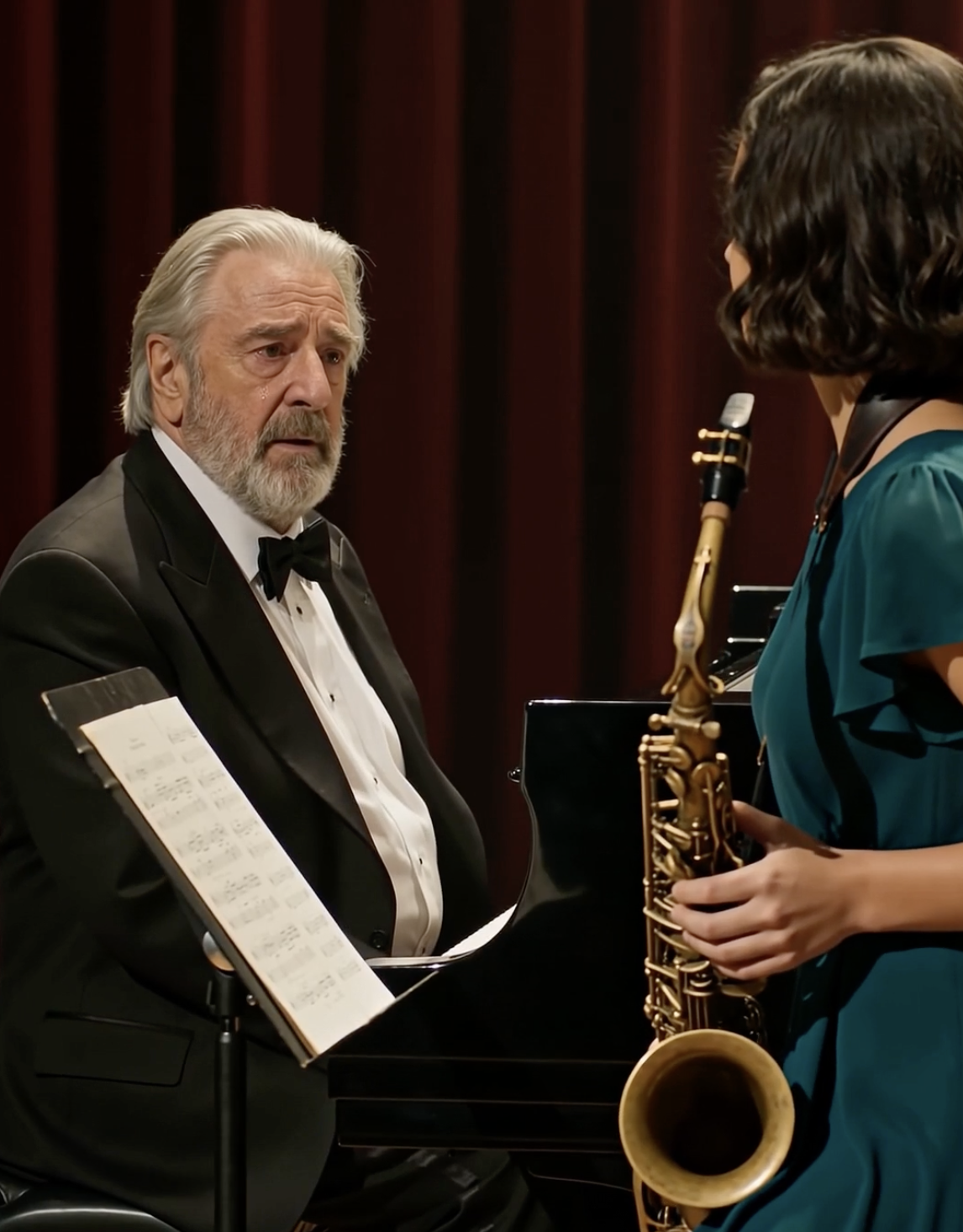
The Carnegie Hall stage on the night of May 21, 2026, was set with two chairs.
This had been the original setting. Helena had not had the second chair removed, even after Saul had committed to the solo format. She had said, when Saul had asked her about it in March, that she had wanted “the empty chair to be present in the room. The audience needs to see what they are missing. That is what this concert is.”
Saul had agreed.
He had not known, until twenty-four minutes before the concert began, that the empty chair was going to be filled.
He had told Helena in the car, on the way to Carnegie Hall, that Naomi was going to play.
Helena had said: “Saul. Is she ready?”
Saul had said: “She believes she is ready.”
Helena had said: “That is not the same thing.”
Saul had said: “With respect, Helena. With Marcus, those were always the same thing. They were the same thing for him. They are the same thing for her. I have known this child since the day she was born. She is her father’s daughter.”
Helena had said: “Saul. If she fails tonight. In front of that audience. On the recording that we are paying eighty thousand dollars to make. On the broadcast that PBS is going to air to seven million people. The legacy of you and Marcus —”
Saul had said: “Helena. The legacy of me and Marcus is sitting in the back seat of this car with her father’s saxophone. The legacy of me and Marcus does not survive an empty chair tonight. The legacy of me and Marcus only survives if someone who knew us and loved us and learned from us sits in that chair. There is exactly one person on this planet who fits that description. And she is in this car. So I am asking you to trust me on this, the way I trusted you for thirty-one years.”
Helena had been silent for a long moment.
She had said: “Okay.”
She had called the Carnegie Hall stage manager from her cell phone in the back of the car.
She had said: “There has been a small change to the program tonight. The second chair will be occupied. Please have the stand light raised by twelve inches. And please make sure her water bottle is on her side of the stand, not Saul’s.”
The stage manager had said: “Yes ma’am.”
He had not asked who would be occupying the chair.
He had been working with Helena Vasquez for twenty-two years.
He had trusted her.
The audience entered the hall at 7:30 PM. They were seated by 7:55 PM. The houselights dimmed at 8:00 PM.
At 8:11 PM, Saul Friedman walked onto the Carnegie Hall stage alone.
The applause was the kind of applause that is offered, in concert halls, when an audience does not yet know whether to applaud the performer or to weep for him. It was loud but it was uncertain. It contained inside it the sound of twenty-eight hundred people deciding, very rapidly and very privately, how they wanted to be in the room for what was about to happen.
Saul walked to the piano.
He bowed.
He sat down.
The applause died.
Saul placed his hands on the keys.
He did not move.
He had been planning, for fourteen months, to play the opening phrase of “Body and Soul.” It was the first piece on the program. It had been the piece he and Marcus had played at their first set together at the Vanguard in 1985. It had been their signature. It was the piece every musician in the hall would expect him to play first.
He could not lift his hands.
He sat at the piano, in front of twenty-eight hundred people, with his fingers resting on the keys, and he discovered — in the way the body discovers things that the mind has been too cowardly to face — that he could not begin.
He sat there for twenty-three seconds.
The audience did not move.
At the twenty-fourth second, the heels of a young woman’s shoes sounded on the wooden stage from the stage-right wing.
Saul lifted his head.
Naomi Carter walked into the light.
What She Did
She was wearing the emerald green dress.
She was holding her father’s saxophone.
She crossed the stage in eleven measured steps. She did not look at the audience. She looked only at Saul. Saul watched her cross. He did not stand. He did not speak. His eyes filled.
She reached the empty chair.
She sat down.
She arranged the saxophone strap over her neck.
She lifted the instrument.
She turned her head slightly toward Saul, and she nodded — small, deliberate.
Saul placed his fingers on the keys.
He breathed.
He played the first three notes of “Body and Soul.”
They were slow. They were tender. They hung in the silent hall the way Marcus’s saxophone had hung in that hall when he was alive.
Naomi raised the saxophone to her lips.
She closed her eyes.
She played her father’s first note.
It was long. It was warm. It was the exact tone her father had been known for, which was a tone other tenor saxophonists in New York City had spent thirty years trying to imitate and had never quite succeeded.
A single tear slid down Naomi’s cheek as she played.
She did not stop.
The audience did not breathe.
The concert lasted ninety-three minutes.
They played all eighteen pieces.
Naomi played every solo.
She did not crack. She did not freeze. She did not lose her place. She breathed. She played. She breathed. She played.
On the fourteenth piece — a ballad called “Estate” that her father had been particularly known for — she allowed herself, briefly, to cry while she played. She had been told not to. She did it anyway. She did not stop playing. The tears ran down her face and onto her dress and the saxophone kept producing the notes her father had played at that point in the ballad every time he had played it for forty years.
After the fifteenth piece, the audience could no longer hold its silence between songs. They began to applaud at the end of every piece, and the applause was long and reverent and grateful, the way applause is when an audience understands it is witnessing something it will spend the rest of its life describing to people who were not there.
The encore was the final piece on the program. It was a song called “What a Wonderful World.” Marcus had been writing the arrangement in his hospital bed during the last three months of his life. He had not finished it. Naomi had finished it for him, alone in her dorm room at Juilliard, in the four months between January and May of 2026. She had not told Saul she had finished it. She had told no one.
She told Saul, just before the encore, by leaning over and saying into his ear:
“Uncle Saul. The encore is different. Papa didn’t finish it. I finished it for him. Follow me. The last twelve bars are mine.”
Saul nodded.
They played the encore.
The last twelve bars of “What a Wonderful World,” as Naomi Carter had written them, alone in a dorm room at Juilliard, at the age of nineteen, were the kind of twelve bars that — in the careful private assessment of every working jazz musician in the hall that night — were going to be played for the next hundred years.
They were the twelve bars of an artist arriving.
Saul played the piano parts as written.
When the final note was held and released, Saul placed his hands carefully on the keys and bowed his head.
Naomi placed the saxophone in her lap.
The audience rose to its feet.
The standing ovation lasted eleven minutes.
What Saul Said
When the ovation finally began to subside — eleven minutes is, by any reasonable measure of a Carnegie Hall standing ovation, on the very long side — Saul Friedman stood up from the piano.
He walked to the microphone at the front of the stage.
He said:
“Marcus Carter taught me everything I know about music. He taught his daughter everything she knows. Tonight, she taught me something he never could — that forty years was not the end of what we started. It was just the first chapter.”
The audience applauded again.
Saul raised his hand.
He said:
“I have been told by my manager that I am not, under any circumstances, supposed to commit to anything publicly on this stage tonight.”
There was scattered laughter.
He said:
“Helena. I am sorry. I am about to commit to something publicly on this stage tonight.”
Naomi looked at him.
Saul said:
“Friedman and Carter played their last concert tonight. But Friedman and Carter is not over. Starting next year, with this young woman’s permission, we will continue to perform together. We will record together. We will tour together. The new group will be called Friedman & Carter, the way it has always been called. Because Marcus Carter, as I have learned tonight, is still in this group. He has just been replaced — by his own daughter, in the chair he taught her to sit in, on the instrument he taught her to play, with a soul that I have known since the day she was born and that I now understand was always meant to do this.”
He turned to Naomi.
He said:
“Sweetheart. Will you do it?”
Naomi stood up from her chair.
She looked at the audience.
She looked at Saul.
She said, into the microphone he was holding toward her:
“Yes.”
The audience rose again.
The second ovation was longer than the first.
What Has Happened Since
Friedman & Carter — the new Friedman & Carter, with Naomi on tenor saxophone in her father’s chair — recorded their first album in the studio at Smoke Sessions Records in October of 2026.
The album was called Naomi.
It was released on March 17, 2027.
It received the kind of reviews albums of this kind almost never receive. DownBeat gave it five stars. The New York Times, in a long review by their senior jazz critic, called it “the most important jazz album of the decade, and arguably one of the ten most important jazz recordings of the past forty years.” Esquire called Naomi Carter “the most significant new voice on the tenor saxophone since the late great Michael Brecker.”
The album went on to be nominated for a Grammy in the Best Jazz Instrumental Album category. It did not win. Saul and Naomi did not attend the ceremony. They were in Tokyo, on the second night of their first international tour, which had been booked, by Helena Vasquez, in the eighteen months following the Carnegie Hall concert and which was scheduled to last for fourteen months and to visit forty-three cities.
The tour was, by Helena’s reckoning, the most commercially successful jazz tour of the past twenty-five years.
Naomi turned twenty years old in Paris, during the European leg of the tour, on April 12, 2027.
Saul gave her, for her birthday, a small leather case.
Inside the case was the original handwritten sheet music for “Body and Soul” — the arrangement Marcus Carter had written for the duo in October of 1985, in pencil on staff paper, with notes in the margins about which sections he wanted Saul to play differently and which sections he intended to take the solo on himself.
Saul had been carrying the sheet music in his briefcase, every night of every concert, for forty years.
He gave it to Naomi.
He said: “This is yours now. He would want you to have it.”
Naomi said: “Uncle Saul. You should keep it. You are the one who has been carrying it.”
Saul said: “I have been carrying it. But you are the one who is going to play it. For a long time. I am sixty-eight years old, sweetheart. The piano parts on this arrangement are not the legacy. The horn parts are the legacy. Your father knew that. I have only just learned it.”
Naomi took the sheet music.
She put it in her own briefcase.
She has, in the eighteen months since, carried it to every concert.
She has not yet, by her own account, gotten through a performance of “Body and Soul” without crying.
She has, by her own account, also not yet missed a single note.
What Was Found In Marcus’s Will
Marcus Carter had left a will.
It had been a simple will, drafted in November of 2024, seven months after his cancer diagnosis. It had left most of his estate to his wife Esther and to his daughter Naomi, in roughly equal shares, with specific provisions for the disposition of his musical instruments and his archive of original arrangements.
The arrangements — the forty years of handwritten sheet music that constituted, for any working musician, the most valuable thing Marcus Carter had ever produced — had been left entirely to Naomi.
There had been one provision in the will, specific to those arrangements, that the family had read for the first time on the morning of February 16, 2025, in the office of the family’s attorney.
The provision read, in Marcus Carter’s own careful handwriting on a single sheet of yellow legal pad paper attached to the formal will:
“Naomi-girl. These are yours.
Use them.
Do not let Saul play alone. He is the heart, but he needs a horn.
You are the horn now.
— Papa.”
Naomi had read this provision on the morning of February 16, 2025.
She had told no one she had read it.
She had begun practicing the Carnegie Hall program in her dorm room at Juilliard sixty-three days later.
“Do not let Saul play alone.
He is the heart, but he needs a horn.
You are the horn now.”
If this story moved you, share it with someone who needs to hear it.
Some fathers write notes on yellow legal pad paper because they know exactly how much time they have left to write them.
Some teenagers spend a year practicing alone in a dorm room because they understand, in the quiet way nineteen-year-olds sometimes understand things, that what their fathers built for forty years was never going to survive an empty chair onstage.
And some empty chairs, in the right concert halls, on the right nights, are filled — not by accident, not by chance, but by the kind of preparation that begins on the morning a will is read, and ends on the night the audience rises to its feet for the second time, and decides not to sit back down.