How a retired postal clerk in Pittsburgh found her own handwriting in a box of undeliverable mail — and what came back through her window the next morning
The box had been in the corner of the back room of the United States Post Office at 5300 Penn Avenue in Pittsburgh, Pennsylvania, since 1986.
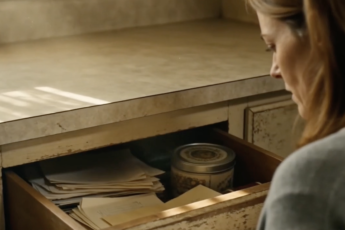
It was a cardboard box. Brown. About the size of a small microwave. On the side of it, in black marker that had faded almost to gray over four decades, were the words “UNDELIVERABLE — REVIEW QUARTERLY.”
Quarterly reviews had not happened in many years.
The box had been moved twice in forty years — once in 1994, when the post office expanded, and once in 2011, when a new sorting machine was installed. Both times someone had picked it up, set it down somewhere else, and walked away without opening it.
It contained 312 letters.
Some of them were addressed to people who had moved. Some to people who had died. Some to addresses that had been demolished, renamed, or absorbed into different ZIP codes. A few had simply been illegible.
The clerk who managed that corner of the back room, year after year, for forty-two years, was a woman named Margaret Hayes.
Margaret Hayes was sixty-seven years old in the spring of 2026.
She was scheduled to retire on May 8.
On May 5, three days before her retirement, her coworkers decided to throw her a small farewell gathering in the back room of the post office. They brought a cake. They brought a card signed by twenty-three USPS employees. They brought, as a small joke, the cardboard box from the corner, which everyone called “Margaret’s Box” because she was the only one who refused to throw it out.
The box was placed on the break-room table.
A coworker — a thirty-eight-year-old man named Ricky Chen, who had worked at the post office for six years — opened the box for the first time in either of their lifetimes.
He pulled out the first letter on the top of the stack.
It was yellowed. Slightly creased. Addressed in looping blue ballpoint cursive.
He looked at the front of the envelope. He read the address.
He stopped smiling.
He turned the envelope over.
He looked back at Margaret.
He said: “Margaret. This is your handwriting.”
What Was on the Envelope
The envelope was addressed to:
Daniel Cole 411 Wightman Street, Apt 3B Pittsburgh, PA 15213
The postmark, faded but readable, said JUN 14 1986.
A red ink stamp on the front of the envelope said:
RETURN TO SENDER — ADDRESSEE NO LONGER AT THIS ADDRESS.
The return address, in the upper left corner, was Margaret Hayes’s first apartment after college. A studio on South Atlantic Avenue. She had moved out of that apartment in August of 1986 and had not lived there for forty years.
Margaret took the envelope from Ricky’s hand.
She put on her reading glasses, which hung from a thin chain around her neck.
She looked at the handwriting.
She did not say anything for what her coworker Ricky later said was “about thirty seconds, maybe a little less.”
Then she said: “I need to sit down.”
A chair was brought to her.
She sat. She did not open the envelope. She held it in both hands. She looked at the address.
After about a minute, she said, very quietly, to no one in particular:
“I sent this in 1986. He never got it. I thought he didn’t want to write back.”
Who Daniel Cole Was
Margaret Hayes had met Daniel Cole in the autumn of 1982. She was twenty-three years old. He was twenty-five. They had met at a coffee shop on Forbes Avenue in the Squirrel Hill neighborhood of Pittsburgh, on a Wednesday afternoon, in a way that neither of them, in 2026, would describe as remarkable but which both of them, between 1982 and 1986, had described as the most remarkable thing that had ever happened to either of them.
Daniel had been studying mechanical engineering at the University of Pittsburgh. Margaret had been working as a temporary clerk at the post office to pay for night classes in education. She had wanted to be a teacher.
They had dated for three years and eight months.
In January of 1986, Daniel had received an offer from a Navy engineering program based in Pensacola, Florida. It was a two-year commitment. He had been ambivalent about taking it. Margaret had told him to take it. They had agreed that he would go, that she would stay in Pittsburgh, that they would write, and that when he came back in 1988 they would talk about what came next.
He had left for Pensacola on April 7, 1986.
He had written to her three times in his first two months — short letters about the heat, the food, the other men in the program. She had written back to each one.
In late May of 1986, Margaret had realized that she was pregnant.
She had been certain that the pregnancy was Daniel’s. She had been less certain about what to do.
She had thought about it for two weeks.
On the evening of June 14, 1986 — a Saturday — she had sat at her kitchen table, in her studio apartment on South Atlantic Avenue, with a yellow legal pad and a blue ballpoint pen. She had written him a letter. The letter was four pages long.
The first paragraph of the letter said:
“Daniel. I am pregnant. The baby is yours. I am not asking you to come back. I am not asking you to marry me. I am writing because I think you should know. I think you have the right to know. What I do with this — what we do with this — I have not decided. But I cannot decide without telling you.”
The other three pages contained, in roughly equal measure: details about her health, details about her recent thinking, and a paragraph in the middle that said “If you don’t write back, I will understand that as your answer. I will not ask twice. I love you. I will love you for the rest of my life regardless of what you decide. But I will not ask twice.”
She had mailed the letter on Monday, June 16, 1986.
She had checked her mailbox every day for six weeks.
The letter had not come back. Daniel had not written back.
Margaret had assumed, on August 1, 1986, that Daniel had read the letter and had chosen not to respond.
She had made an appointment for the following Friday.
She had gone to the appointment.
She had told no one.
She had moved out of her apartment on South Atlantic Avenue the next week, and had gone to stay with her older sister in Cincinnati for four months. When she returned to Pittsburgh in December, she had taken a permanent position at the post office and had started looking for a one-bedroom apartment in a different part of town.
She had not heard from Daniel Cole again for forty years.
What Margaret Did Not Know
What Margaret Hayes did not know — and would not learn until late on the evening of May 5, 2026, sitting in the break room of the post office on Penn Avenue, after Ricky Chen had driven her home and her supervisor had called Daniel Cole’s number twice and finally reached him — was that her letter had never gotten to Pensacola.
It had been returned to the Pittsburgh sorting facility on August 3, 1986, because Daniel Cole had been transferred out of his Pensacola program in late July of 1986 and had been reassigned to a Navy base in San Diego.
The forwarding address had not yet been processed when her letter arrived.
The letter had been stamped RETURN TO SENDER. It had been routed back to the originating Pittsburgh facility for return to Margaret Hayes at her South Atlantic Avenue address.
By the time it had arrived back in Pittsburgh, Margaret Hayes had already moved out of South Atlantic Avenue. She had not yet filed a forwarding address with the post office because she was leaving the city for an indeterminate period and had not known where she would be living when she came back.
So the letter had been routed to the undeliverable mail box in the back room of the post office on Penn Avenue.
Where it had sat, in the same brown cardboard box, for forty years.
The same brown cardboard box that Margaret Hayes had refused to throw away, every single quarterly review, for forty-two years.
The same box that her colleagues had teased her about for two decades.
She had not known her own letter was in it.
She had never opened it.
What Daniel Did Not Know
What Daniel Cole did not know, on the evening of May 5, 2026, when he received a phone call from a USPS supervisor named Andrea Mathis informing him that a piece of mail addressed to him in 1986 had been recovered from a sorting facility, was that Margaret had ever been pregnant.
He did not know the letter existed.
He had finished his Navy program in February of 1988. He had come back to Pittsburgh in March of 1988 looking for Margaret. He had gone to the apartment on South Atlantic Avenue. New tenants. He had asked at the post office on Penn Avenue, but the supervisor at the time had not had a forwarding address on file for Margaret Hayes. He had called Margaret’s mother — a woman who had never approved of him — who had said, in the only conversation he ever had with her, that Margaret was “living her own life now” and had asked him to “please not call again.”
He had not called again.
He had stayed in Pittsburgh because he was not, by his own admission later, “the kind of man who knew what else to do.” He had taken a job as an engineer at a small machining company in the South Hills. In 1993, after the company laid him off, he had bought a tiny metalworking shop on East Carson Street and had run it himself for thirty-three years.
He had never married.
He had not, in his words spoken to me in 2026, “made any particular decision about it.” He had simply “never met anyone who made me want to ask the question.”
He had thought about Margaret often. He had assumed, for forty years, that she had chosen to end their relationship — that her silence after his return in 1988 had been her answer. He had assumed she had been the one who left.
She had assumed the same thing about him.
For forty years, they had both been wrong.
What Happened on May 6, 2026
Daniel Cole came to the post office at 11:14 AM on Tuesday, May 6, 2026.
He had not slept that night. Andrea Mathis, the supervisor who had called him, had told him three things on the phone: that a letter from Margaret Hayes had been recovered, that Margaret Hayes still worked at the post office on Penn Avenue, and that Margaret Hayes had not yet opened the letter.
She had told him, at his request, that Margaret would be at window 2 the next morning between 10:00 AM and 1:00 PM.
She had also told him, when he asked, that Margaret had never married.
Daniel had not asked for the letter to be sent to him. He had asked, instead, if he could come to the post office and pick it up in person.
He had spent the next twelve hours, by his own description, “sitting at my kitchen table and not eating my dinner.”
At 9:30 AM the next morning, he had driven to the post office in the same brown corduroy jacket he had owned since 2007, in the same work boots he wore to his machining shop every day, and had parked in the back lot.
He had arrived at the building at 11:14 AM holding the letter in both hands. Andrea Mathis had given him the letter that morning when he came in. He had asked to read it alone first. She had let him sit in a small back office for nine minutes. He had read the letter twice. He had folded it carefully and put it back in the envelope.
Then he had walked out into the customer area. The time was 11:23 AM.
There were eight people in the line. Margaret was at window 2. She had been told by her supervisor that morning that Daniel was coming. She had not been told when.
She had been working her line normally, processing packages and selling stamps, for an hour and fourteen minutes, when the front bell of the post office door had chimed and Daniel Cole had stepped through it.
The line, which had been a normal post office line — chatty, slightly bored, eight people deep — had become quiet within ninety seconds. Two of the customers were people Margaret knew personally. Both of them, in those ninety seconds, recognized what was happening.
The line stepped aside without being asked.
Daniel walked to window 2.
He did not speak.
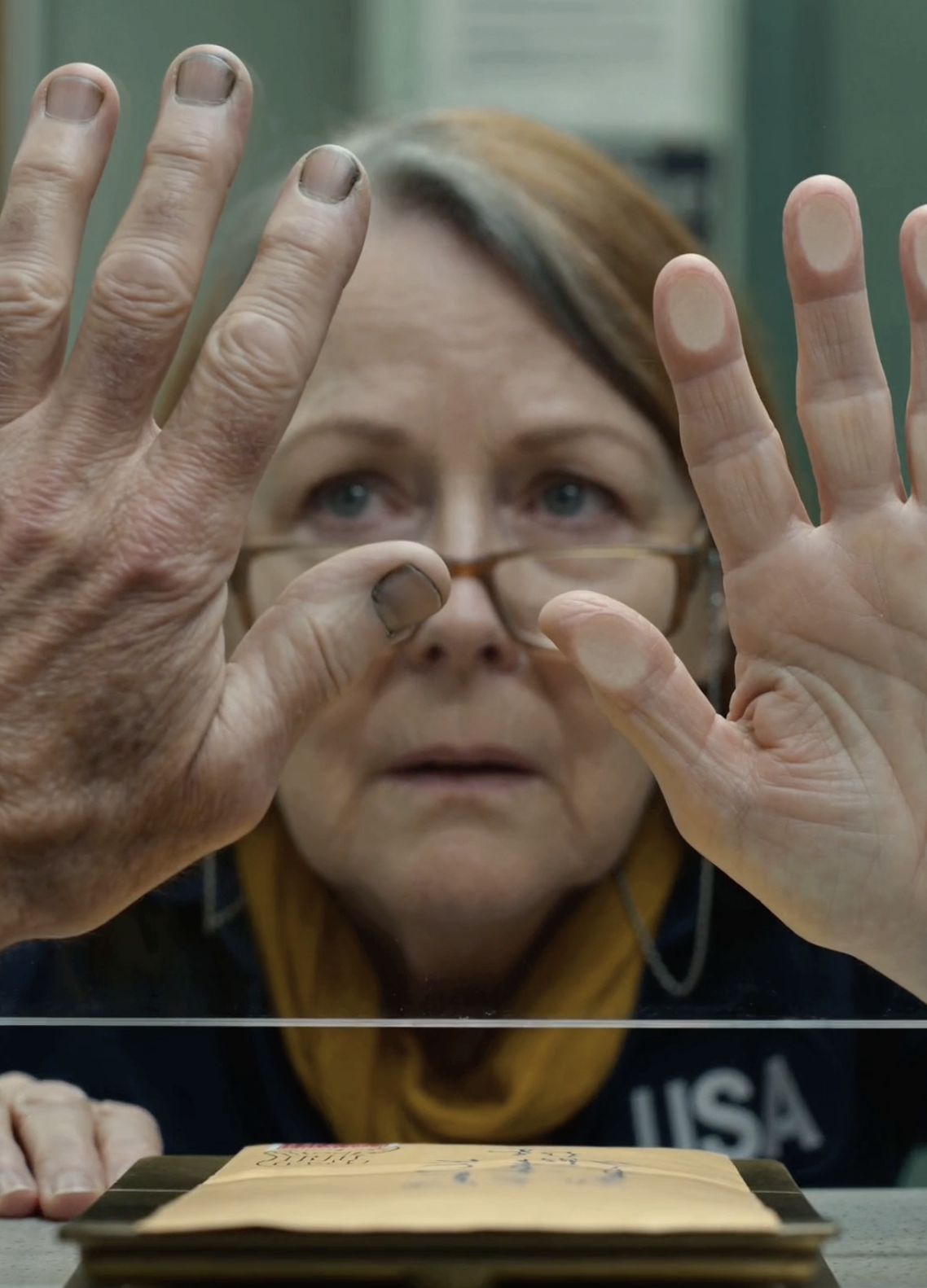
He placed the envelope on the brass tray under the bulletproof acrylic.
He stepped back. He put his hands, palms down, on the counter ledge.
Margaret looked at the envelope. Then up at Daniel. Then back at the envelope.
She did not reach for the intercom button.
She raised her right hand and placed it flat against the acrylic divider.
Daniel raised his right hand and placed it flat against the acrylic on his side.
They held that position, palms facing each other through half an inch of bulletproof glass, for what Andrea Mathis, who was watching from the back office, later said was “about two minutes. Maybe a little more. I don’t think either of them was counting.”
Then Margaret stood up, locked her station, walked around to the customer side, and the two of them sat down on a bench by the front window for the next forty-five minutes.
The line dispersed.
The next customer, a woman holding a package, said, very quietly, to Andrea Mathis: “I’ll come back tomorrow.”
She did.
What They Did Next
They did not, in Daniel’s words, “start dating again.”
They went to a coffee shop on Forbes Avenue — not the one where they had met in 1982, which had closed in 2009, but a newer one a block away. They sat there for three hours.
They came back the next day. And the day after that.
By the end of the first month, they were meeting every Tuesday afternoon at 2:00 PM at the same coffee shop. They sat at the same table. They talked, mostly, about what each of them had done with the forty years.
They did not talk about the pregnancy or what had happened to it for the first six weeks.
When Daniel did finally ask, on a Tuesday in late June, Margaret told him the truth. She told him everything. She told him what she had decided, and why, and what she had thought about it in the years afterward.
Daniel did not respond for a long time.
When he did, he said: “Margaret. I would have come back. If I had known. I would have come back the next day.”
Margaret said: “I know. I know that now.”
Daniel said: “I’m sorry I didn’t write more.”
Margaret said: “I’m sorry I didn’t write twice.”
They did not talk about it again after that.
What Happened in August
On June 28, 2026, Daniel Cole was diagnosed with acute myeloid leukemia.
He was sixty-nine years old. His prognosis was poor.
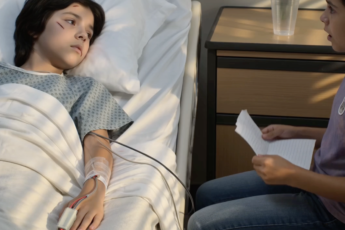
He went into hospice care at St. Margaret of Scotland Hospital in Pittsburgh on July 24, 2026. Margaret Hayes visited him every day, for two and a half hours, between 4:00 PM and 6:30 PM. They watched television. They talked about people they had both known in 1985. They listened to the rain on the windows when it rained.
On August 8, 2026, at 4:47 AM, Daniel Cole died.
Margaret Hayes was not in the room at the moment of his death. She had been there the previous evening until 9:00 PM and was scheduled to return at 8:00 AM. The night nurse who was with him at the time later told Margaret that he had been calm and that he had not spoken in his last hour.
Daniel Cole’s will, which he had updated on July 14, 2026 — about two weeks after his diagnosis, but before he had told Margaret about it — left a small wooden box to Margaret Hayes.
The box was made of cherry wood. It was the size of a shoebox. He had built it himself in 1991.
Inside the box were forty-seven letters.
They were not in envelopes. They were folded sheets of paper, some on yellow legal-pad sheets, some on plain white paper, some on the back of receipts and machine-shop invoices. They were not dated.
Daniel had written them, one at a time, over the course of forty years, in moments when he had wanted to tell Margaret something. He had not sent them because he had not known where to send them.
The most recent letter in the box was written on April 14, 2026 — three weeks before he had received the call from Andrea Mathis.
It was on a single sheet of yellow legal-pad paper. It was short.
It read, in full:
Margaret,
I am not writing anymore. I do not know where you are. I looked in the mirror this morning and I realized that I have been talking to you every morning for forty years. I am not unhappy. I have just always been talking to you. Forgive me for that.
Daniel.
What Margaret Did With the Letters
Margaret Hayes read all forty-seven letters in the four days after Daniel’s funeral.
She read them in chronological order, to the best of her ability to date them by their contents. The earliest one had been written, by internal evidence, in October of 1989.
She did not, when I spoke to her in November of 2026, tell me what was in most of them. She said: “They are not for the article. They are for me.”
She did tell me about three of them.
One, written sometime in the mid-1990s on the back of a metal-shop invoice, said: “Margaret. I bought a dog today. I think you would have liked her. She is a brown mutt and she sleeps in the chair you used to like. I named her Margaret. I have not told anyone what her name is. They all call her Maggie. She doesn’t seem to mind.”
One, written sometime around 2001 — Margaret could date it by Daniel’s reference to a news event — said: “Margaret. The world is a strange place tonight. I keep wanting to call you. I do not have your number. I should have written your number down in 1986. I have made many small mistakes. That is the one I think about.”
One, written in 2019, said: “Margaret. I am sixty-two years old today. I do not know if you are still alive. I assume you are. You were always more careful than I was. If you are alive, I hope you are happy. If you are not alive, I hope you knew, at the end, that I never stopped writing to you. I just stopped sending.”
Margaret folded the letters back into the cherry-wood box.
She put the box on the table next to her reading chair in her small house in the Greenfield neighborhood of Pittsburgh, where she has lived alone since 1993.
She has not, in her own words, decided what to do with them.
What I Asked Margaret
I sat with Margaret Hayes in the front room of her house on a Saturday afternoon in late November of 2026, three months after Daniel’s death. She had made coffee. The cherry-wood box was on the table between us. She had not opened it during our conversation.
I asked her one question.
I asked her what she would have done — what she thought she would have done — if Daniel’s reply had arrived in Pittsburgh in August of 1986, the way it should have.
She thought about it for a long time.
She said:
“I don’t know if we would have stayed together. I was twenty-seven and he was twenty-nine and we were not the people we became. We might have made each other miserable. I don’t know.”
She paused.
“What I do know is that I would have known. And he would have known. And both of us would have known what the other person chose.”
She paused again.
“For forty years, neither of us knew what the other person chose. We just assumed.”
She looked at the cherry-wood box.
“That is the part I cannot get back. Not the marriage we didn’t have. Not the child we didn’t have. The knowing. The forty years of not knowing.”
She looked up at me.
“If you take one thing away from this conversation, take that. If you have a letter you have not sent — send it. If you have a question you have not asked — ask it. The not-knowing is the only thing that does not heal. Everything else, eventually, becomes a story you can tell.”
“The not-knowing is the only thing that does not heal.
Everything else, eventually, becomes a story you can tell.”
If you have someone you have not spoken to in too long, this is your sign.
Some letters take forty years to get where they are going.
Some letters never get there at all.
Send the one you have been carrying.