THE ROSE TATTOO — A Story That Will Haunt You
It was 2:14 AM on a Tuesday night in Brooklyn.
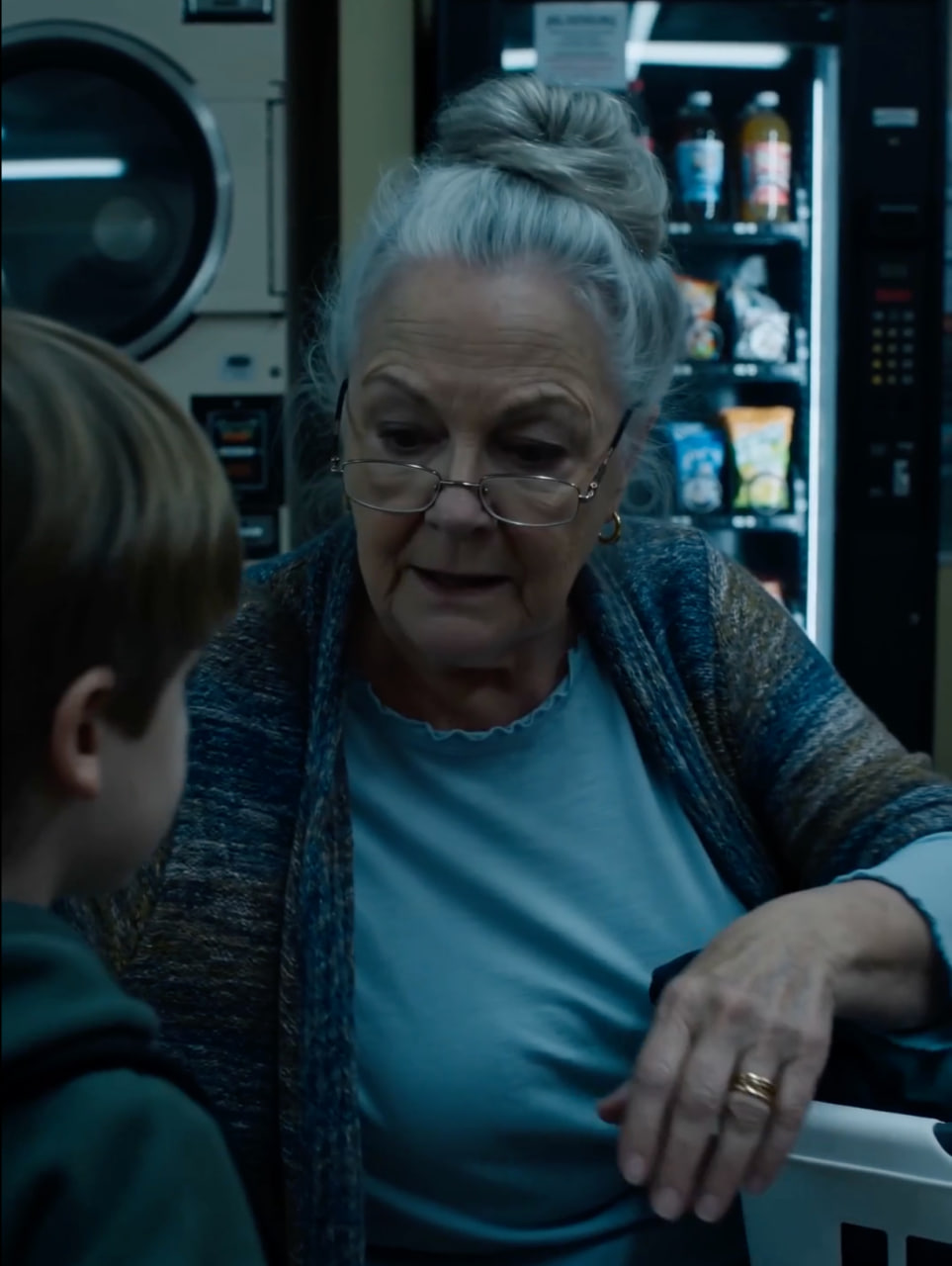
Margaret Ellis, 67, sat alone in the Surf Avenue Laundromat, the same one she had been coming to for thirty years. Not because she didn’t have a washer at home. She did. But sleep hadn’t come easy since 2011, and the hum of the machines gave her something the silence of her apartment never could — peace.
She folded her late husband’s flannel shirts. She had never stopped washing them. Twelve years after his death, they still smelled like him if she closed her eyes long enough.
The bell above the door jingled.
A woman walked in. Mid-thirties. Dark coat. Phone pressed to her ear. Behind her, a small boy — six, maybe seven — in an oversized hoodie that swallowed his tiny frame. Messy brown hair. A backpack clutched to his chest like a shield.
The woman pointed to a plastic chair near the window.
“Sit there. Don’t move. Don’t talk to anyone.”
The boy sat. The woman stepped outside to finish her call, pacing in front of the glass door, her voice muffled but sharp.
Margaret glanced at the boy. He wasn’t watching the woman. He was watching Margaret.
For five minutes, neither of them moved.
Then the boy stood up.
He walked slowly across the laundromat, past the humming dryers and the vending machine with the broken coin slot, and stopped right in front of Margaret’s folding table.
“Ma’am…”
His voice was barely a whisper.
Margaret looked down at him over her reading glasses. “Yes, sweetheart?”
The boy glanced toward the glass door. The woman was still outside, her back turned.
“She is not my mother.”
Margaret’s hands froze on the flannel shirt.
“What did you say?”
“She is not my mother,” the boy repeated. His eyes were steady. Too steady for a child his age. “She took me from the park three days ago. I don’t know where my dad is.”
Margaret felt the air leave her lungs. Her mind raced. Call the police. Stay calm. Don’t scare him. Keep him talking.
“Okay, honey. Okay. Come sit right here next to me.”
She gently pulled a chair closer. The boy sat down, still clutching his backpack, his small body trembling slightly. Margaret positioned herself between the boy and the door.
The woman outside was still on her phone. Still hadn’t looked inside.
“What’s your name?” Margaret whispered.
“Ethan.”
“Ethan, you’re safe now. I’m not going to let anything happen to you.”
The boy nodded. Then his eyes drifted down to Margaret’s wrist — to the small tattoo she’d gotten in 1987, back when tattoos on women still raised eyebrows. A single rose. Red petals. Green stem. No bigger than a quarter.
The boy’s eyes went wide.
“That’s it,” he whispered.
“What’s it?”
“The rose. My dad said… my dad said if I ever got lost, if I was ever in trouble, I should find the lady with the rose on her wrist.”
Margaret stared at the boy.
“Your dad said that?”
“Yes, ma’am. He said she would keep me safe. He said she always keeps people safe.”
Margaret’s heart was hammering now. Her mouth went dry. The laundromat suddenly felt too bright, too loud, too small.
“Ethan… what is your father’s name?”
The boy looked up at her with those impossibly steady eyes.
“Michael.”
The flannel shirt slipped from Margaret’s hands and fell to the floor.
Michael.
Michael David Ellis.
Her son.
The son she had buried fifteen years ago in Green-Wood Cemetery on a rainy October afternoon. The son who died in a car accident on the BQE at twenty-three. The son whose room she still hadn’t cleaned out. The son whose flannel shirts she was still washing at 2 AM in a Brooklyn laundromat because she couldn’t let go.
“That’s… that’s not possible,” she whispered.
“He told me something else,” the boy said. He unzipped his backpack and pulled out a folded piece of paper, worn at the edges, soft from being held too many times.
He handed it to Margaret.
She unfolded it with shaking hands.
It was a photograph. Polaroid. Faded.
A young woman, maybe twenty-five, sitting in this exact laundromat, at this exact table, holding a baby boy in her arms. She was laughing. On her wrist — the rose tattoo, fresh and bright.
On the back of the photo, in handwriting she would recognize anywhere — Michael’s handwriting — were four words:
“She’ll know what to do.”
Margaret pressed the photograph to her chest and broke down.
The machines hummed on.
The woman outside finished her call and reached for the door handle.
And Margaret Ellis, sixty-seven years old, five-foot-two, arthritic knees, a woman who hadn’t raised her voice in fifteen years — stood up, put the boy behind her, and said the words she didn’t know she still had in her:
“You are not taking this child.”
The police arrived eleven minutes later. The woman was arrested in front of the laundromat. Her real name was not the one she had given the boy. Ethan was reunited with his father’s family — an aunt in Bay Ridge who had been searching for him for seventy-two hours.
But no one could explain the photograph.
No one could explain how a boy who had never met Margaret Ellis knew about the rose tattoo.
And no one could explain the handwriting on the back of that Polaroid — verified by three separate people who knew Michael’s handwriting — written by a man who had been dead for fifteen years.
Margaret still goes to the laundromat every Tuesday night.
She still folds the flannel shirts.
But now, tucked into the pocket of her cardigan, she carries the photograph.
And sometimes, when the machines are humming just right and the fluorescent lights flicker the way they always do around 2 AM — she swears she can smell her son’s cologne.
Just for a second.
Just long enough to know he’s still watching.