It rained in Newark every morning that November.
Not the kind of rain that makes you stay home. The quiet kind. The kind that sits on your shoulders and follows you to work and waits for you outside the office and walks you back to the bus stop at the end of the day.
That was the kind of rain falling at 6:47 AM on a Tuesday when Elena Marsh, 30, litigation associate at a mid-size law firm in downtown Newark, stood under the cracked glass shelter on South Orange Avenue, holding a coffee from the bodega on the corner and waiting for the 107 bus.
She almost didn’t see him.
An old man. Seventy-five, maybe older. Sitting on the bench with his hands on a dented aluminum tray. Green army jacket, faded to the color of old moss. Stained khaki pants. Boots that had walked more miles than most cars. A gray beard that hadn’t been trimmed in weeks. Eyes that looked like they had stopped expecting anything from anyone a long time ago.
On the tray, wrapped loosely in paper towels, were homemade buns. Six of them. Golden brown. Still warm — she could see the faint steam curling up into the cold air.
He had been offering them to people. She had watched three commuters walk past him without making eye contact.
She almost did the same.
But the man looked up at her. Not with desperation. Not with the hollow stare she had trained herself to walk past in this city. He looked at her the way someone looks at a person they’ve been waiting for.
“Please,” he said quietly. “My daughter loved these.”
His voice was steady. Not begging. Just offering.
Elena hesitated. She thought about the bus. She thought about the deposition she had to prep by nine. She thought about every article she had ever read about not taking food from strangers.
Then she looked at the buns again.
And something in her chest shifted.
She took one.
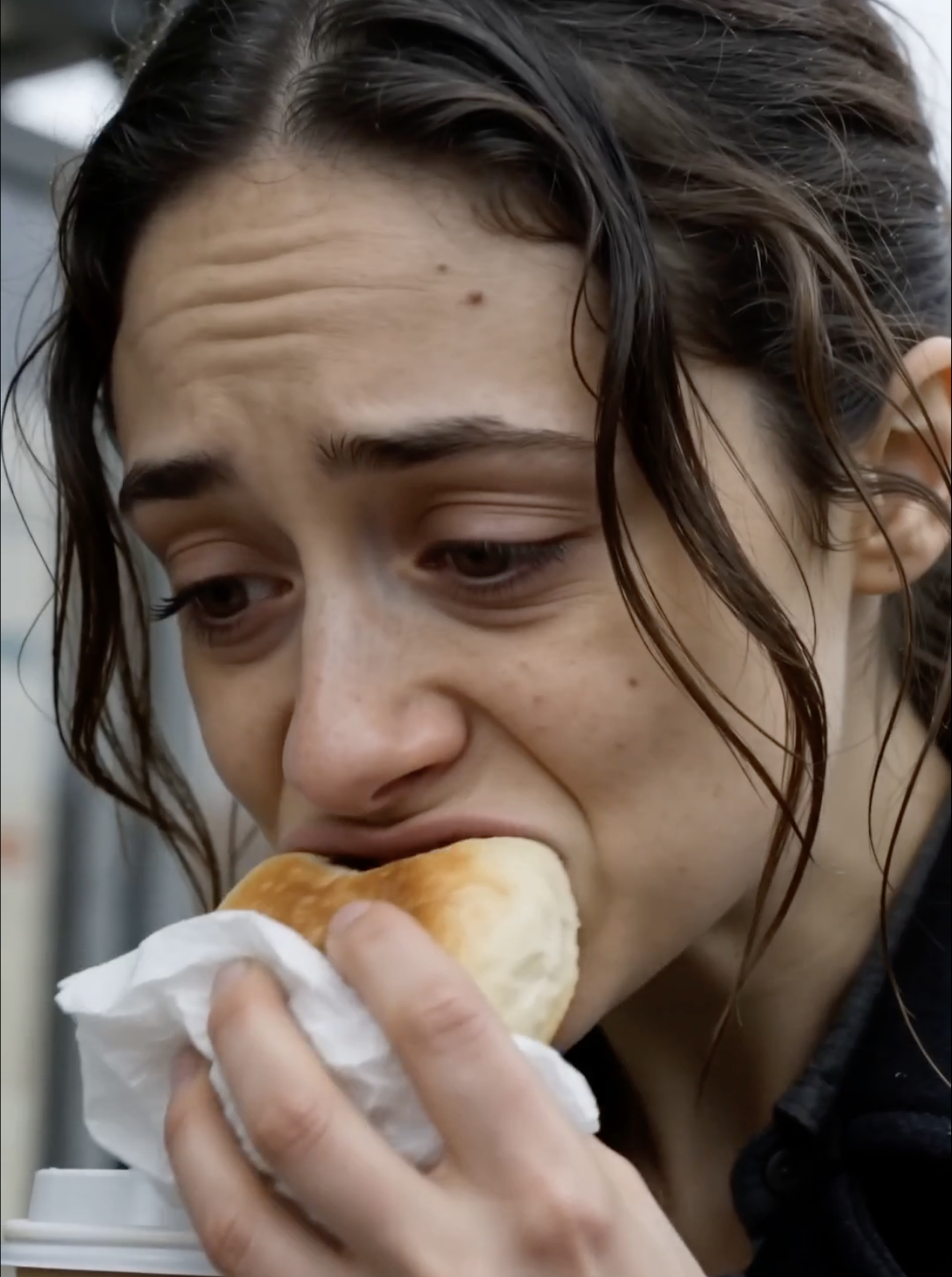
It was warm in her hand. Heavier than she expected. She bit into it. Soft dough, a hint of cinnamon, a faint sweetness that wasn’t sugar — it was honey. Honey and something else. Something she couldn’t name but could feel in the back of her throat, behind her eyes, in a place where memories live before they become words.
She stopped chewing.
She knew this taste.
Not from a bakery. Not from a restaurant. From a kitchen. A small kitchen with yellow curtains and a cracked tile floor and a radio that played too loud in the morning. From a woman in a blue apron who hummed while she worked the dough and always, always, put in too much honey because “that’s how your father likes them.”
Elena’s mother.
Maria Lucia Marsh. Born in San Juan. Moved to Newark at nineteen. Married a soldier at twenty-two. Made these buns every morning for eleven years.
Until the soldier didn’t come home.
Sergeant First Class David Marsh. 82nd Airborne Division. Deployed to Afghanistan in 2003. Reported missing during a convoy ambush near Kandahar in 2004. Search operations found nothing. No body. No remains. No explanation.
Declared dead in 2006.
Elena was eight years old.
Her mother never made the buns again.
She didn’t stop because she forgot the recipe. She stopped because the recipe was his. David had learned it from his own mother in Paterson, New Jersey, and taught it to Maria on their second date in a borrowed kitchen on Halsey Street. It was the thing that made her fall in love with him, she used to say. Not the uniform. Not the shoulders. The buns. The honey. The way he folded the dough like he was folding a letter to someone he missed.
When he disappeared, the recipe disappeared with him. Maria packed the kitchen. Sold the house. Moved Elena to a smaller apartment on Seventh Avenue. Got a job at a dry cleaner. Never spoke about the buns again.
Elena learned not to ask.
Twenty-two years later, she was standing at a bus stop, holding the same bun, tasting the same honey, and trying to understand why her hands were shaking.
She looked down at the tray.
The old man was watching her. Not surprised. Patient.
She moved two buns aside with trembling fingers. Underneath the paper towels, pressed flat against the bottom of the tray, was a photograph.
Creased. Faded. Wallet-sized. Black and white with a yellow tint that only comes from being carried for decades.
A young man in military dress uniform. Clean-shaven. Strong jaw. Dark eyes. Holding a baby girl wrapped in a white blanket. Behind them, a kitchen with yellow curtains.
Elena recognized the kitchen.
She recognized the blanket.
She recognized the man.
The coffee cup slipped from her hand and hit the wet concrete.
She looked at the old man on the bench. Past the beard. Past the wrinkles. Past the years that had carved his face into someone she almost couldn’t see.
But the eyes.
The eyes were the same.
“Dad?”
The word came out broken. Half voice, half breath.
The old man looked at her. His lips trembled. He nodded once. Slowly. The way a man nods when he has rehearsed this moment for twenty-two years and still isn’t ready for it.
Elena’s knees buckled. She grabbed the edge of the bench. The bun was still in her hand. She was squeezing it so hard the honey seeped between her fingers.
“They told us you were dead,” she whispered. “They gave us a flag. Mom kept it in the closet. She couldn’t even look at it.”
The old man closed his eyes.
“I know,” he said. “I know.”
“Where were you?”
He opened his eyes. They were wet.
“I was lost, Elena. For a very long time. I was lost.”
He didn’t explain more. Not yet. Not at a bus stop in the rain in Newark at 6:47 in the morning. Some stories need a kitchen and a quiet room and hours that don’t have a schedule attached to them.
But he reached into the pocket of his army jacket and pulled out a folded piece of paper. Soft. Worn thin from years of folding and unfolding.
He handed it to her.
She opened it.
It was the recipe. Handwritten. His handwriting — she recognized it from the birthday cards her mother kept in a shoebox under the bed. The ink was faded but every line was legible. Every measurement. Every instruction. And at the bottom, in smaller letters, a note:
“For Elena. When she’s old enough to make them herself. — Dad”
She read it three times.
Then she sat down on the wet bench next to him and cried into his shoulder while the 107 bus came and went and came and went again.
The police report was filed that afternoon. DNA confirmation took six days. Sergeant First Class David Marsh, declared dead in 2006, was alive. The details of his twenty-two years — where he had been, what had happened, how he had survived and why he never came home — would take months to surface and longer to understand.
But none of that mattered at 6:47 AM on a Tuesday in November.
What mattered was the buns.
What mattered was that he remembered.
What mattered was that after twenty-two years of being lost, the first thing David Marsh did when he finally found his way back was to make the recipe he had written down for his daughter before she could even walk.
Maria Marsh was contacted that evening. She didn’t believe it until she walked into the room and saw him. She didn’t say a word. She just stood in the doorway and stared at him for a very long time.
Then she said: “You used too much honey. You always use too much honey.”
And David Marsh laughed for the first time in twenty-two years.
Elena still takes the 107 bus.
She still stops at the bodega on the corner.
But every Tuesday morning, she brings a small aluminum tray to the office. Inside, wrapped in paper towels, are six golden buns with too much honey.
And when her colleagues ask her where she learned the recipe, she says the same thing every time:
“My father taught me.”