The 78-year-old who found her granddaughter pouring wine in a Charleston restaurant
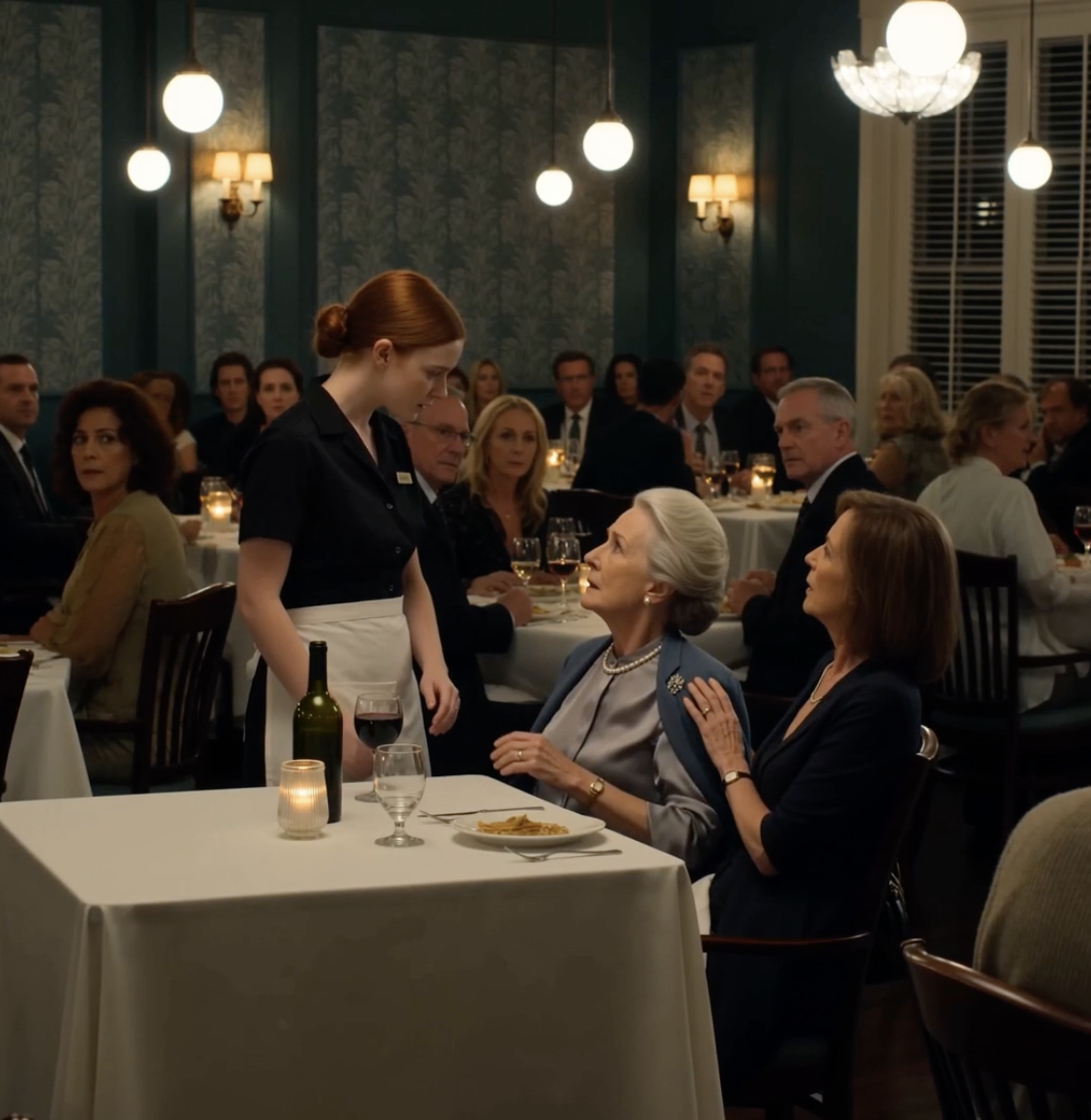
Evelyn was eating dinner with her two adult children at a restaurant called Magnolia, on East Bay Street in Charleston, on a Saturday evening in November.
She had not been to Magnolia in eight years. Her late husband had liked it, and after he died in 2017, she had stopped going to the places he had liked, because what was the point. But her daughter had insisted on a family dinner this weekend, and Magnolia had been her son’s choice, and Evelyn was seventy-eight years old and had learned, long ago, that you do not turn down family dinners with grown children who actually still want them.
It was 8:14 in the evening when the new waitress brought their wine.
The waitress was twenty-two years old. Her name tag said HANNAH. Her hair was in a low practical bun and she had freckles across her nose and a tired shadow under her eyes that Evelyn recognized as the shadow of a young woman working two jobs.
She poured the Bordeaux into Evelyn’s glass and began to explain the wine.
She got six words in before Evelyn put a hand on her wrist.
What Evelyn Saw
On the pinky finger of Hannah’s left hand was a thin gold ring with a small ruby.
The band was 1.5 millimeters wide. The ruby was perhaps three millimeters across, in a four-prong setting that had been popular in the early 1960s and was rarely seen in jewelry made after that decade. The gold had the dull soft sheen of yellow gold that had been worn against skin for a very long time. The setting had a small flaw — the right prong was slightly bent inward, a flaw Evelyn knew about because she had been the one who bent it, on the afternoon of April 5, 1962, when she had caught her finger on a wicker laundry basket in her bedroom in her father’s house.
It was her ring.
It was the ring her first love had given her in the summer of 1961, when she was fifteen years old and he was seventeen, and they had spent six months promising each other that they would find a way.
It was the ring she had sewn into the lining of a folded flannel blanket on the morning of April 12, 1962, before her father’s housekeeper drove the wicker bassinet to the Catholic adoption office on Calhoun Street and Evelyn was not allowed to say goodbye.
She had been looking for this ring on the hands of strangers for sixty-two years.
She had not known, until that moment, that she had been looking.
What Happened in 1962
Evelyn was sixteen when she had her daughter.
The young man who had been the daughter’s father was a Citadel cadet, the son of a Black laundress and a white plumber from North Charleston. He was, in 1962 South Carolina, the kind of mistake that respectable families did not allow their daughters to make publicly. There had been a quiet meeting, and a private bus ticket, and a small home in Asheville for unmarried mothers, and a return to Charleston with a story about a long visit to a cousin.
Evelyn was told the baby had been a healthy girl. She was told the baby had been placed with a good family. She was told it would be best, for everyone, if she did not ask any more questions.
She did not ask any more questions for the next sixty-two years.
She married, three years later, a man her father introduced her to — a third-generation Charleston attorney whose family went back to the Revolution. She had two more children with him. She raised them, kept the household, hosted the dinners, sat on the boards of the right charities, wore the right pearls, smiled in the right photographs. Her husband was not a cruel man. He was not a particularly kind one either. He died of a stroke in 2017.
Evelyn had never told her two younger children about the daughter she had given away in 1962.
She had never told her husband, either.
She had told no one.
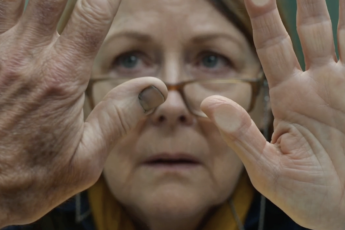
What she had done, every Sunday morning for sixty-two years, was sit in a pew at Saint Philip’s Episcopal Church and look quietly at the hands of every young woman in the congregation. Then every Sunday afternoon she would walk the seawall along the Battery and look quietly at the hands of every woman she passed.
She did not expect to find anything. She had stopped expecting decades ago. But she had not stopped looking, because the looking was the only thing she had been able to give the daughter she could not raise — a mother’s lifelong attention, given silently, given to strangers, given just in case.
What Hannah Knew
Hannah Caldwell was twenty-two years old. She had grown up in Mount Pleasant, just across the Cooper River bridge, the only child of a kindergarten teacher named Patricia Caldwell and a Coast Guard mechanic named Tom.
She had known, since she was eleven, that her mother had been adopted.
She had known the basics: her mother had been adopted from a Catholic agency in Asheville in May of 1962. Her mother’s adoptive parents — Hannah’s adoptive grandparents — had been kind and Lutheran and had owned a hardware store in Greenville. They were both gone now. Hannah’s mother, Patricia, had never expressed any particular interest in finding her biological family. “I have a family,” she had said to Hannah once, when Hannah had asked. “I’m not in a hurry to go shopping for another one.”
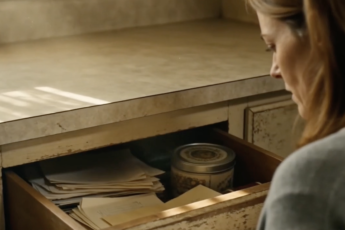
The only piece of biological history Patricia had been given, by her adoptive parents, was a small folded flannel blanket — the blanket she had arrived in.
On the morning of Hannah’s eighteenth birthday, Patricia had given Hannah the ring.
The ring had been found, decades earlier, sewn into the lining of the blanket. Hannah’s adoptive grandparents had unstitched it, set it aside, and given it to Patricia when she turned twenty-one. “It came with you,” the adoptive grandmother had told Patricia. “It’s the only piece of where you came from. Wear it if you ever want to know.”
Patricia had never worn it.
Patricia had given it to Hannah on her eighteenth birthday, in a small velvet box, with a single sentence written on a card: “This is the only thing I have from the woman who carried you. If you ever want to look for her, this is what you have to look with.”
Hannah had worn the ring on her left pinky every day for four years.
She had never, once, looked for the woman who had carried her grandmother. She had been busy. She had been in college. She had been working two jobs to pay for college. She had been twenty-two and a half years old, and the woman would be in her late seventies if she was alive at all, and Hannah had figured that someday she would do something about it, but that someday had not yet come.
Until the night Evelyn put a hand on her wrist at table four.
What Happened Next
Evelyn did not let go of Hannah’s wrist for sixteen seconds. (Her son timed it, later, in the conversation that he would have with his sister at one in the morning in his sister’s kitchen, after they had driven their mother home in stunned silence.)
Hannah said the same three sentences she had told a hundred strangers when they had asked her about the ring at parties and weddings: “It was my mother’s. She got it from her mother. Why?”
Evelyn did not answer Hannah’s question.
What she said, very quietly, in a voice that her two adult children had never heard her use before, was: “I would like to speak with you after your shift. I will wait. I will pay for your time. Please. Please.”
Hannah’s shift ended at 11:00 PM.
Evelyn sent her two adult children home in an Uber. She sat alone at table four for almost three hours. She drank one glass of water. She did not touch her food. She paid the bill in cash without looking at it.
At 11:14 PM, Hannah Caldwell sat down across from Evelyn at table four. She had taken off her apron. She had her server’s tip envelope in her left hand. She was, by her own account, “about half scared and half curious and half tired, which adds up to more than a hundred percent of a person but that was how I felt.”
What Evelyn said to her, very slowly, over the next forty-seven minutes, was the entire story. The Citadel cadet. The bus ticket. The Asheville home. The flannel blanket. The ring sewn into the lining. The sixty-two years of looking at hands.
She did not cry. She had not cried in front of another person in twenty-six years. She did not cry that night either.
What she did was, at the end of the story, ask Hannah a single question:
“Is your mother still alive?”
Hannah said: “Yes, ma’am.”
Evelyn closed her eyes. Then she opened them again. Then she said:
“Would she be willing to meet me?”
What Patricia Said
Patricia Caldwell, the daughter Evelyn had not seen since 1962, agreed to meet her biological mother three days later, at a coffee shop on King Street.
The meeting lasted forty minutes.
Patricia, it turned out, had been quietly curious about her biological mother for many years, despite what she had told Hannah. She had simply not known where to start, and she had not wanted to hurt the feelings of the adoptive parents who had raised her. Both adoptive parents had been dead for over a decade by the time Hannah turned eighteen.
Patricia and Evelyn did not embrace at the coffee shop. They sat across a small wooden table from each other. They spoke politely. Patricia asked her biological mother three questions. Evelyn answered all three. Patricia did not ask a fourth.
At the end of the meeting, Patricia stood up, thanked Evelyn for her time, and said: “I’d like to think about it for a while. I’m grateful you found me. I’m not ready to call you anything yet. I hope that’s all right.”
Evelyn said it was more than all right.
They have met three more times in the year since. The relationship is careful. There is no rushing.
Hannah, however, has been visiting her newly discovered great-grandmother every Sunday afternoon since the first meeting.
What Evelyn Did with Her Will
Two weeks after that first dinner at Magnolia, Evelyn rewrote her will.
She did this without consulting either of her two adult children — her daughter Margaret, age fifty-three, an interior designer, and her son Charles, age forty-eight, a real estate developer. Both of them were comfortable. Both of them had received substantial trusts at the deaths of their father and their paternal grandfather. Neither of them depended, in any meaningful financial sense, on the estate of their mother.
The estate was, however, considerable. It included the Charleston house on Tradd Street, a small barrier-island house on Sullivan’s Island, an investment portfolio that had been managed by the same firm since 1971, and an art collection of moderate regional value.
The new will, signed in the presence of Evelyn’s attorney on a Tuesday in late November, left every asset to her biological daughter Patricia, with a specific provision that the Tradd Street house and a separate trust be set aside for Hannah Caldwell.
Margaret and Charles were not disinherited. They received a small specific bequest of family heirlooms, and a letter from their mother that was opened in the lawyer’s office on the day the will was changed.
What the letter said is between Evelyn and her two children. I have not been allowed to see it.
What I have been allowed to know is that Margaret filed a lawsuit contesting the new will within five weeks of its signing.
The lawsuit is ongoing. Evelyn is, as of this writing, still alive, and has indicated to her attorney that she will fight the lawsuit with every dollar she has, “if it takes the rest of my life and bankrupts the estate, which would only mean that nobody gets it, including the children I raised, and I would consider that a fair price for telling the truth at the end of my life.”
Charles has not joined his sister’s lawsuit. He has, however, stopped speaking to his mother. He told her, in a brief phone call in early December, that he could not understand how she had kept this secret for sixty-two years and then chosen to detonate it in three weeks. He has not visited her since.
The family is, by any reasonable definition, broken.
What Hannah Said to Evelyn in the Lawyer’s Office
The day Evelyn signed the new will, Hannah came with her.
Patricia did not come. Patricia had said she did not want to be in the room when her biological mother gave her things, because she did not want it to look like she had asked for any of it. Patricia is a stubborn woman, like both her mothers.
Hannah came because Evelyn had asked her to.
In the lawyer’s office on Broad Street, after the documents were signed and the lawyer had stepped out of the room to make copies, Evelyn turned to her great-granddaughter and asked her the only question she had been wanting to ask since the night at Magnolia.
She said: “Will you forgive me for what I did to your grandmother?”
Hannah thought about it for a long time. She was twenty-two years old. She had been raised by parents who had loved her, by a mother who had been loved by adoptive parents, by a great-grandmother who had, it turned out, never stopped loving her, even when she had not known where she was for sixty-two years.
She said, very quietly:
“You didn’t do anything to her. They did.”
Six words.
Evelyn put her hands over her face and wept for the first time in twenty-six years.
What I Asked Her
I sat with Evelyn on the porch of the Tradd Street house in March, four months after the will was signed and the family had broken apart.
She is seventy-nine now. She looked tired. The lawsuit was still ongoing.
I asked her the only question I had been wanting to ask.
I asked her whether she would have done it differently, knowing what it would cost.
She thought for a long time. She was holding a glass of sweet tea. She did not drink from it.
Then she said:
“My children — my two younger children — believe that I have chosen Patricia over them. That is not what happened. I have not chosen anyone. I have only stopped pretending. For sixty-two years I pretended that my daughter had not existed. I lied to my husband. I lied to my children. I lied to my friends and my church and my own mother on her deathbed. I have spent every day of my adult life as a liar. What I did with the will is not a choice between my children. It is the only honest act I have left to perform.”
She paused.
“My son is not speaking to me. My daughter is suing me. I understand. I would be furious too, if my mother had hidden a sister from me for fifty years. I do not blame them. I would only ask them to consider, when they have stopped being furious, whether they would rather have a mother who lied to them for sixty-two years and died lying, or a mother who told them the truth at seventy-eight and gave them eight years to be angry with her before she died telling it. I have decided to give them the second one. It is the only thing I have left to give that is mine.”
She set the tea down. She looked out at the small garden.
“I do not know if my son will forgive me before I die. I am prepared for the possibility that he will not. That is a price I am paying. I hope he understands, someday, that I did not pay it casually.”
“You don’t keep a secret for sixty-two years.
You keep a secret until the day someone walks past you wearing it on their hand.”
If this story moved you, share it with someone who needs to hear it.
The people who walked past you today — the ones whose hands you noticed for no reason — there is a chance one of them has been waiting for you.
Look at them anyway.